Why Is My Cat Peeing Outside the Litter Box?
Start by Ruling Out Medical Causes
A cat that normally uses the litter box but suddenly starts peeing on rugs, bedding, furniture, or floors should be checked by a veterinarian. Pain, urgency, and increased urine production can make the box hard to reach in time, or turn it into a place your cat starts to associate with discomfort.
Common medical reasons include:
- Feline lower urinary tract disease (FLUTD): A broad term for bladder and urethral problems that may cause straining, frequent urination, or blood in the urine.
- Urinary tract infection: More common in older cats and cats with underlying health issues than in young, healthy adults.
- Bladder stones or crystals: These may irritate the bladder or block urine flow.
- Kidney disease: Often shows up first as increased thirst and larger volumes of urine.
- Diabetes: Can make a cat drink and urinate far more than usual, sometimes noticeably so, almost overnight.
- Arthritis or mobility pain: An older cat may start avoiding a box with high sides, or one that’s stuck down in the basement.
- Cognitive changes: Senior cats can become confused or simply forget where the box is.
Signs That Need Urgent Veterinary Care
If your cat is repeatedly trying to urinate but producing little or nothing, get emergency help right away, don’t wait until morning. This is especially urgent for male cats, who can develop a life-threatening urinary blockage in a matter of hours.
Other warning signs include:
- Crying or yowling while urinating
- Blood in the urine
- Excessive licking around the genitals
- Lethargy, vomiting, or hiding
- A hard or painful-looking abdomen
- Sudden, dramatic changes in thirst or appetite
If you see any of these, don’t sit on it hoping it resolves by itself.
Is It Urinating or Spraying?
Knowing the difference matters, because the causes, and fixes, are often completely different.
Urinating usually means your cat squats down and leaves a puddle on something flat: a carpet, a bath mat, a bed, maybe a pile of laundry left on the floor. This pattern tends to point toward a medical issue, a litter box the cat doesn’t like, or stress.
Spraying, on the other hand, is more of a message than an accident. A cat stands, tail up (sometimes trembling slightly), and backs up to release a small squirt of urine on something vertical, a wall, a doorframe, the leg of a chair. You’ll usually smell it before you see it.
Unneutered males are the most frequent sprayers, but don’t rule out neutered males or females, plenty of them spray too, particularly when they feel their territory is being challenged.
Check the Litter Box Setup
Cats can be surprisingly picky about their bathroom. What looks perfectly fine to us, a box tucked in a corner, cleaned every couple of days, might feel dirty, cramped, loud, or downright unsafe to your cat.
Run through this checklist:
- Provide one litter box per cat, plus one extra. Two cats? You need three boxes.
- Spread boxes across separate, quiet spots instead of lining them up side by side in one room.
- Scoop solid waste and urine clumps at least once a day, twice is better if you can manage it.
- Empty, wash, and refill boxes on a regular schedule, using a mild, unscented soap.
- Pick a box that’s actually big enough, most cats want room to turn around freely, roughly 1.5 times their body length.
- Stick with unscented, fine clumping litter. Heavy perfumes that smell nice to us can be enough to send a sensitive cat elsewhere.
- Keep food and water bowls well away from the litter area.
- Don’t park a box next to a washing machine or furnace, the noise alone can be a dealbreaker.
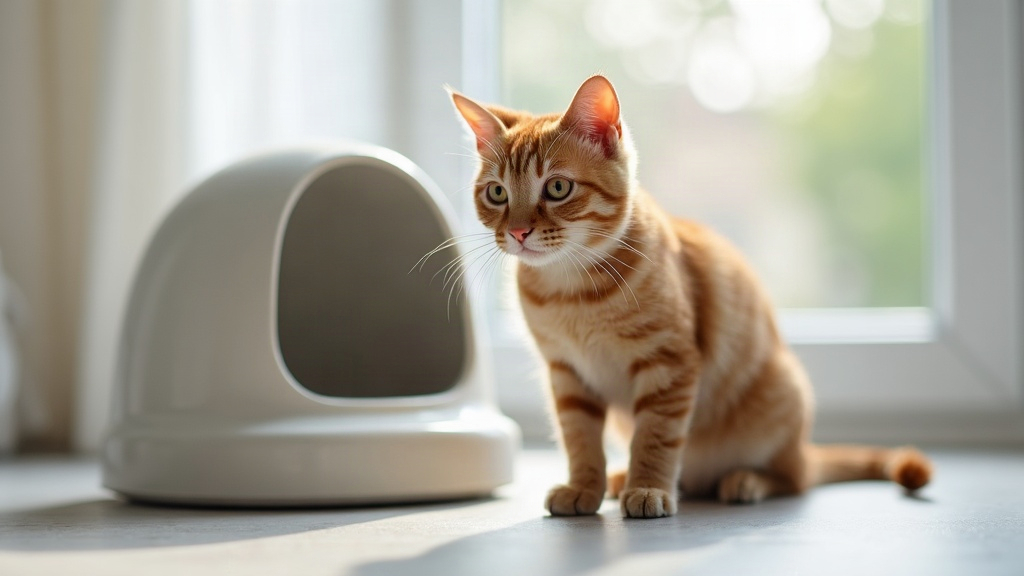
Covered boxes cut down on mess, sure, but a lot of cats can’t stand them: odors get trapped inside, and the cat can’t see if another pet is sneaking up while they’re vulnerable. If your cat has recently started avoiding a covered box, try setting an open one nearby and see what happens.
Make the Box Easier for Older Cats
For a cat dealing with arthritis, switch to a low-entry box with a shallow front opening, climbing over a tall rim can genuinely hurt. And put a box on every floor of the house, so your cat never has to make a painful dash up or down stairs when the urge hits.
Consider Stress and Environmental Changes
Cats often express stress through their bathroom habits, and the triggers can be surprisingly small. A new baby, a houseguest, another pet, a renovation crew banging around, a strange cat pacing outside the window, a shifted work schedule, even furniture that’s been rearranged, any of it can throw a sensitive cat off balance.
The good news: stress-related accidents often improve once you add more predictability and give your cat somewhere to feel safe. Try this:
- Keep feeding, play, and cleaning routines on a steady schedule.
- In multi-cat households, give each cat their own resting spot, food station, water bowl, scratching post, and litter box.
- Add vertical space, cat trees, shelves, so cats have room to avoid each other without conflict.
- Block the view of outdoor cats if window-watching seems to set off territorial behavior.
- Fit in short daily play sessions with a wand toy or something to chase.
- Ask your vet whether a feline pheromone diffuser might help take the edge off.
In homes with more than one cat, watch for the quiet kind of bullying. A cat doesn’t need to hiss or swat to make a housemate miserable, a hard stare, blocking a hallway, or just loitering near the litter box can be enough to make another cat too nervous to go in.
Clean Accidents Properly
Cats gravitate back to spots that still carry the scent of old urine, even after you think you’ve scrubbed it away. Use an enzymatic pet urine cleaner made to break down urine proteins, not just mask the smell. Follow the label directions and let it dry completely before letting your cat near it again.
Skip ammonia-based cleaners entirely. Their smell is close enough to urine that it can actually invite repeat marking in the same spot. And never punish your cat, yell, or rub their nose in the mess, it doesn’t teach them anything useful, and it tends to make them more anxious, which usually makes the problem worse, not better.
If your cat keeps returning to one particular spot, try placing a litter box right there after cleaning. Once they’re using it reliably, inch it a few inches or feet a day toward wherever you’d actually like it to live.
Keep a Simple Record
A quick diary can be more useful than you’d expect. Jot down when and where accidents happen, how big the puddles are, when you last cleaned the box, anything that’s changed at home, food switches, and any symptoms like straining or drinking more than usual.
This kind of record is especially valuable when the problem seems to come and go rather than following an obvious pattern, it gives your vet something concrete to work from.
Conclusion
When a cat pees outside the litter box, it’s worth treating as a message rather than a punishment-worthy offense. Get a vet visit to rule out illness, tidy up the litter box setup, dial down household stress, and clean any accidents thoroughly. Once the real cause is addressed, most cats settle right back into reliable litter box habits.